Collective heat production Flower apartments

Within the European ACCU project, Brugge Vivendo was selected as a pilot project to achieve sustainable local energy storage and sharing without fossil fuels, with a focus on cooperation, knowledge sharing, and social added value.

CLIENT: Vivendo

LOCATION: Sint-Michiels , Bruges

TIMING: feasibility study completed by the end of 2025

project runs until 2028

BUDGET: study to implementation

170.000 EUR
Services
No items found.
Sectors
Collective heat production Flower apartments

Collective heat production Flower apartments

Framework and objective

Within the European ACCU project, Brugge Vivendo was selected as a pilot project. The project focuses on local storage and sharing of non-fossil energy, with an emphasis on local energy communities, knowledge sharing, social added value, and cooperation between partners. The project will run for four years. Ingenium translated the local case into a robust pilot context and ensured a clear project structure and coordination between Vivendo, the City of Bruges, and European partners.

Project scope

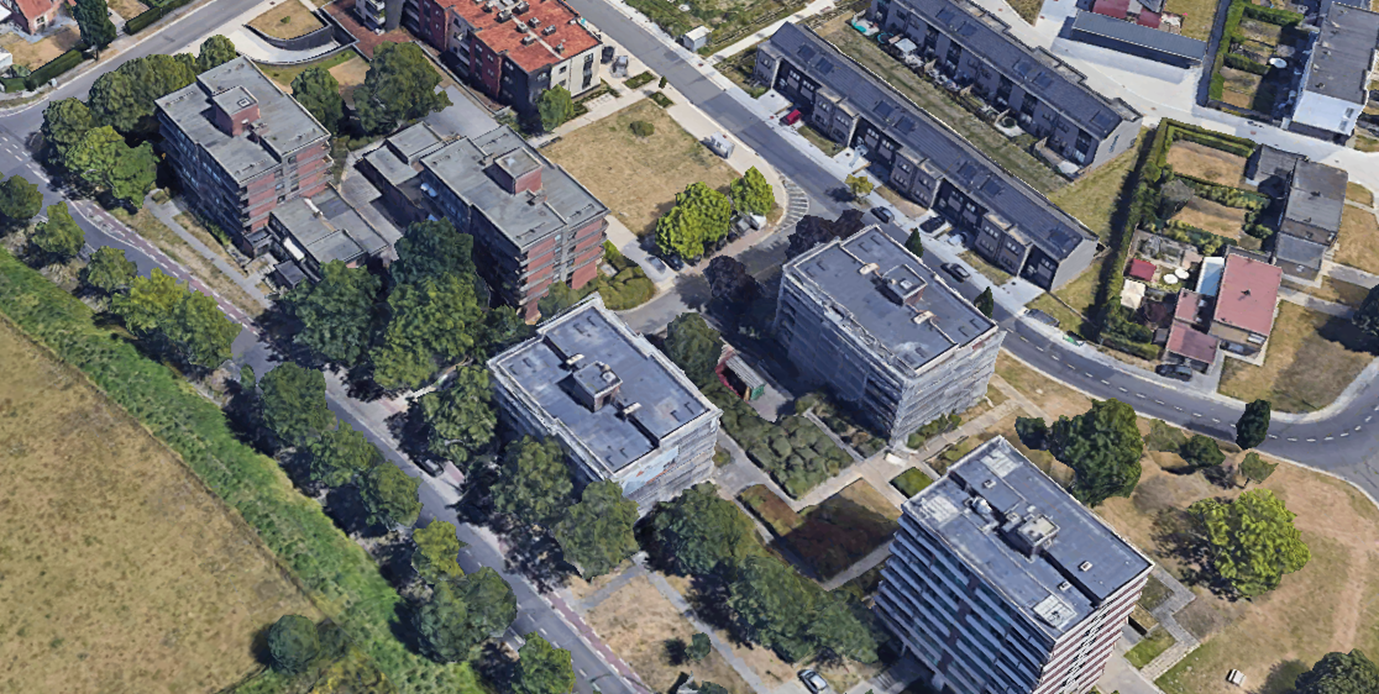
The pilot site comprises five building blocks with apartments. The concept is also relevant for application in and with the public domain, which is why the City of Bruges is involved in the project as a stakeholder. The scope can be viewed more broadly with opportunities for linking, such as greening and softening.

Current situation

The buildings have previously been renovated on the outside, including new carpentry, roof renovation, and repairs. The existing heating is electric air heating. Sanitary hot water is currently provided by electric boilers per residential unit.

Technical concept in a European context

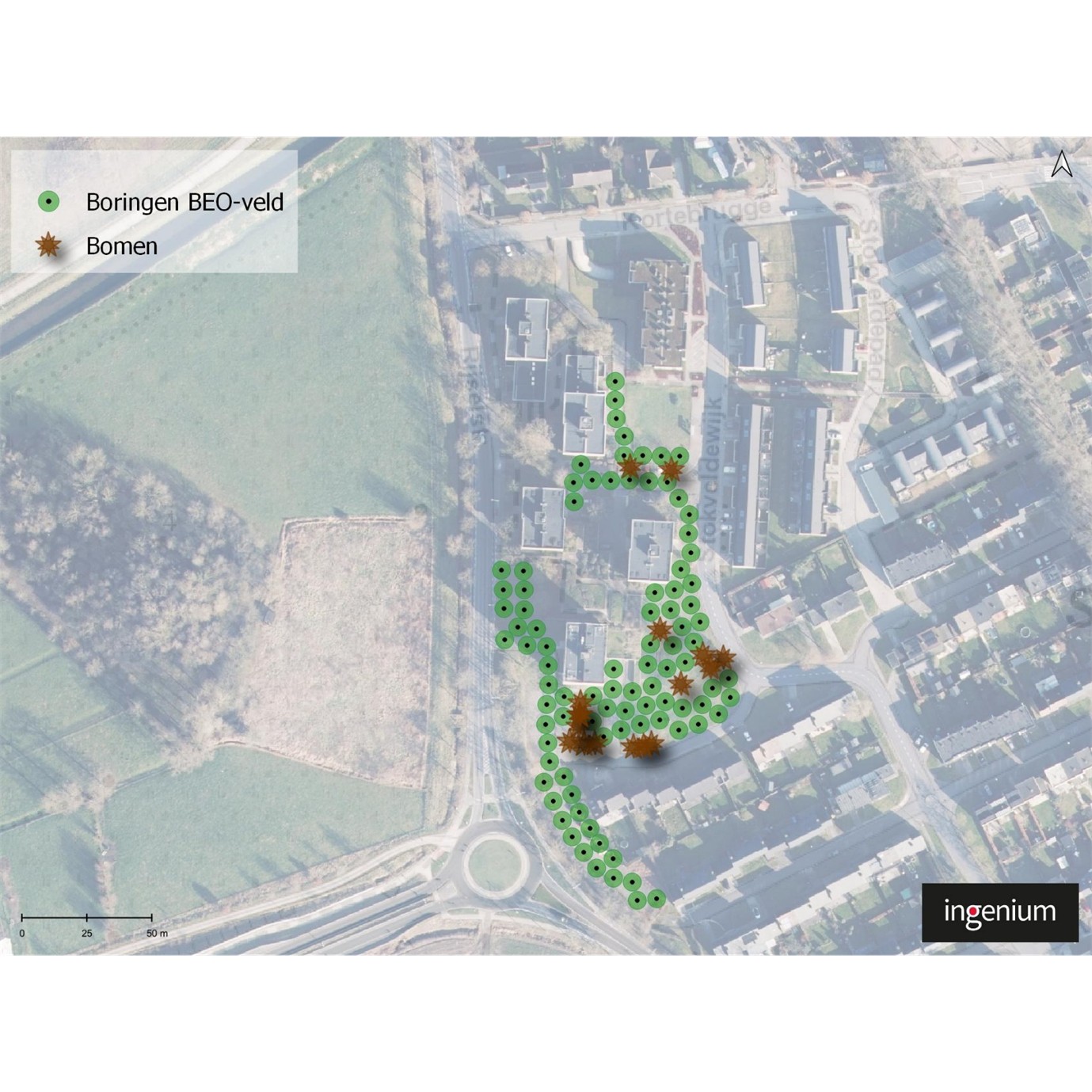
The core of the proposed collective system is heat storage in the subsurface via shallow geothermal drilling as a seasonal buffer. Heat pumps and solar energy are combined with storage in the BEO field so that heating and cooling can be produced and controlled locally. Ingenium developed the system architecture based on the existing situation, with a focus on feasibility, phasing, and maintaining occupancy.

Study and decision-making

In the initial phase, Ingenium drew up a memorandum with a draft design, including a long list and short list for production systems and delivery systems, using a multi-criteria method with weighting factors. The criteria included maintaining occupancy, phasing of settlement, affordability, and the increasing need for cooling. This approach resulted in a well-founded and transparent choice for the client, stakeholders, and partners.

Selected scenario

A scenario with a collective low-temperature heating system

Central water heat pumps on BEO deliver 35 to 45 °C on a primary network.

· For each residential unit, the connection is made via a delivery station to the delivery elements.

· Plumbing hot water remains individual per residential unit


Status and next phase

The concept phase and selection of the preferred scenario have been completed. The next phase will start in early 2026 with the engineering, in which the accumulated evidence and choices will form a clear starting point for dimensioning and detailed design.


Collective heat production Flower apartments

Collective heat production Flower apartments

Within the European ACCU project, Brugge Vivendo was selected as a pilot project to achieve sustainable local energy storage and sharing without fossil fuels, with a focus on cooperation, knowledge sharing, and social added value.

CLIENT: Vivendo

LOCATION: Sint-Michiels , Bruges

TIMING: feasibility study completed by the end of 2025

project runs until 2028

BUDGET: study to implementation

170.000 EUR

Services
No items found.
Sectors
Collective heat production Flower apartments

Collective heat production Flower apartments

Framework and objective

Within the European ACCU project, Brugge Vivendo was selected as a pilot project. The project focuses on local storage and sharing of non-fossil energy, with an emphasis on local energy communities, knowledge sharing, social added value, and cooperation between partners. The project will run for four years. Ingenium translated the local case into a robust pilot context and ensured a clear project structure and coordination between Vivendo, the City of Bruges, and European partners.

Project scope

The pilot site comprises five building blocks with apartments. The concept is also relevant for application in and with the public domain, which is why the City of Bruges is involved in the project as a stakeholder. The scope can be viewed more broadly with opportunities for linking, such as greening and softening.

Current situation

The buildings have previously been renovated on the outside, including new carpentry, roof renovation, and repairs. The existing heating is electric air heating. Sanitary hot water is currently provided by electric boilers per residential unit.

Technical concept in a European context

The core of the proposed collective system is heat storage in the subsurface via shallow geothermal drilling as a seasonal buffer. Heat pumps and solar energy are combined with storage in the BEO field so that heating and cooling can be produced and controlled locally. Ingenium developed the system architecture based on the existing situation, with a focus on feasibility, phasing, and maintaining occupancy.

Study and decision-making

In the initial phase, Ingenium drew up a memorandum with a draft design, including a long list and short list for production systems and delivery systems, using a multi-criteria method with weighting factors. The criteria included maintaining occupancy, phasing of settlement, affordability, and the increasing need for cooling. This approach resulted in a well-founded and transparent choice for the client, stakeholders, and partners.

Selected scenario

A scenario with a collective low-temperature heating system

Central water heat pumps on BEO deliver 35 to 45 °C on a primary network.

· For each residential unit, the connection is made via a delivery station to the delivery elements.

· Plumbing hot water remains individual per residential unit


Status and next phase

The concept phase and selection of the preferred scenario have been completed. The next phase will start in early 2026 with the engineering, in which the accumulated evidence and choices will form a clear starting point for dimensioning and detailed design.


Collective heat production Flower apartments
Oops! Something went wrong while submitting the form.
21009.003

Collective heat production Flower apartments

Within the European ACCU project, Brugge Vivendo was selected as a pilot project to achieve sustainable local energy storage and sharing without fossil fuels, with a focus on cooperation, knowledge sharing, and social added value.

CLIENT: Vivendo

LOCATION: Sint-Michiels , Bruges

TIMING: feasibility study completed by the end of 2025

project runs until 2028

BUDGET: study to implementation

170.000 EUR

Services
No items found.
Sectors
Collective heat production Flower apartments

Collective heat production Flower apartments

Framework and objective

Within the European ACCU project, Brugge Vivendo was selected as a pilot project. The project focuses on local storage and sharing of non-fossil energy, with an emphasis on local energy communities, knowledge sharing, social added value, and cooperation between partners. The project will run for four years. Ingenium translated the local case into a robust pilot context and ensured a clear project structure and coordination between Vivendo, the City of Bruges, and European partners.

Project scope

The pilot site comprises five building blocks with apartments. The concept is also relevant for application in and with the public domain, which is why the City of Bruges is involved in the project as a stakeholder. The scope can be viewed more broadly with opportunities for linking, such as greening and softening.

Current situation

The buildings have previously been renovated on the outside, including new carpentry, roof renovation, and repairs. The existing heating is electric air heating. Sanitary hot water is currently provided by electric boilers per residential unit.

Technical concept in a European context

The core of the proposed collective system is heat storage in the subsurface via shallow geothermal drilling as a seasonal buffer. Heat pumps and solar energy are combined with storage in the BEO field so that heating and cooling can be produced and controlled locally. Ingenium developed the system architecture based on the existing situation, with a focus on feasibility, phasing, and maintaining occupancy.

Study and decision-making

In the initial phase, Ingenium drew up a memorandum with a draft design, including a long list and short list for production systems and delivery systems, using a multi-criteria method with weighting factors. The criteria included maintaining occupancy, phasing of settlement, affordability, and the increasing need for cooling. This approach resulted in a well-founded and transparent choice for the client, stakeholders, and partners.

Selected scenario

A scenario with a collective low-temperature heating system

Central water heat pumps on BEO deliver 35 to 45 °C on a primary network.

· For each residential unit, the connection is made via a delivery station to the delivery elements.

· Plumbing hot water remains individual per residential unit


Status and next phase

The concept phase and selection of the preferred scenario have been completed. The next phase will start in early 2026 with the engineering, in which the accumulated evidence and choices will form a clear starting point for dimensioning and detailed design.



Collective heat production Flower apartments

Related projects

Leiedal TEAH technical expertise

Leiedal TEAH technical expertise
In the spotlight

Technical advice new swimming pool Ypres

Technical advice new swimming pool Ypres
In the spotlight

Heat zoning plan and heat policy planning cities of Mechelen, Vilvoorde, Lier, Knokke-Heist and Herentals

Heat zoning plan and heat policy planning cities of Mechelen, Vilvoorde, Lier, Knokke-Heist and Herentals
In the spotlight

Vilvoorde Energy Vision Plan

Vilvoorde Energy Vision Plan
In the spotlight

Energy master plan region Sint-Pietersnieuwstraat and Overpoort Ghent

Energy master plan region Sint-Pietersnieuwstraat and Overpoort Ghent
In the spotlight

Terhills Eisden energy strategy - DC grid and large-scale PV

Terhills Eisden energy strategy - DC grid and large-scale PV
In the spotlight

DC Microgrids for Sustainable Energy Supply in Togo

DC Microgrids for Sustainable Energy Supply in Togo
In the spotlight

Guidance on the participatory rollout of a heat network in the Ravenshout industrial park in Beringen

Guidance on the participatory rollout of a heat network in the Ravenshout industrial park in Beringen
In the spotlight

Research on collective heat system for social housing patrimony

Research on collective heat system for social housing patrimony
In the spotlight

Regina Mundi Genk

Regina Mundi Genk
In the spotlight

Route plan climate neutral city buildings Bruges

Route plan climate neutral city buildings Bruges
In the spotlight

Role Province of East Flanders in mini-heat grid development

Role Province of East Flanders in mini-heat grid development
In the spotlight

Also bitten by
smart technology?

Come push boundaries with us and help make a difference in our industry-leading projects.