
Rezoning of Leuven City Hall
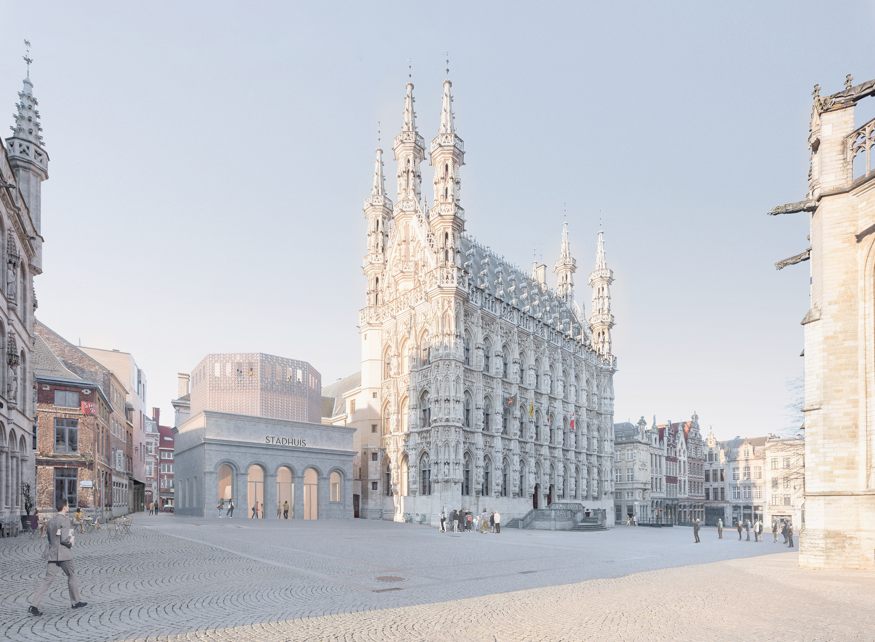
This project concerns the restoration and repurposing of Leuven's historic Town Hall located in the project area bounded by Grote Markt, Naamsestraat and Boekhandelstraat.
Client
Leuven City Council
Contact
Katrien.deckers@leuven.be
Designer/Architect
FELT architecture & design
aNNo architects
Partners
BAS, Daidalos
Location
Grote Markt 9, 3000 Leuven
renovation
Surface
7,250 m²
Budgettechniques
€7,179,000 excluding VAT
Total construction cost
€27,850,000 excluding VAT
Period Study
April 2020 - October 2024
Period ofimplementation】.
Oct 2025–Dec 2029
Copyright images and photos
aNNo architects & FELT architects
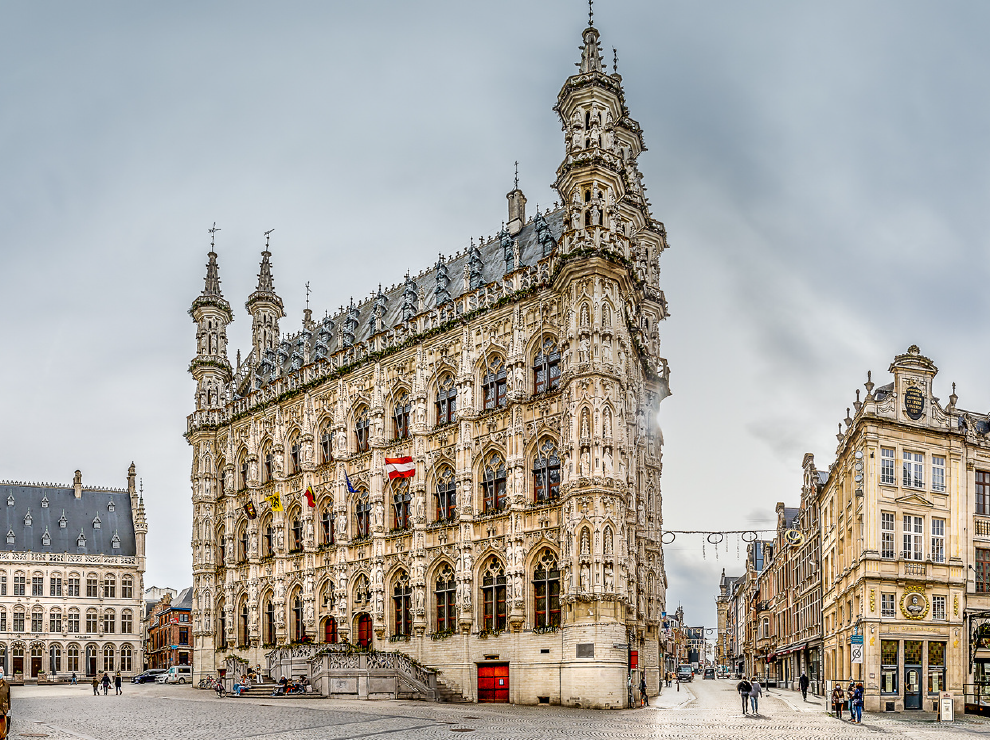
Leuven’s historic 15th-century city hall on the Grote Markt is undergoing a thorough restoration and repurposing. Architectural firms FELT architecture & design and aNNo architecten are transforming this rich heritage site into a contemporary space that will include, among other things, museum exhibition areas. Ingenium designed the building systems within the strict parameters of heritage preservation.
Combining heritage with modern functionality
Repurposing historic buildings presents design teams with a complex challenge: achieving modern functionality, comfort, and sustainability within the strict framework of heritage preservation while maintaining the architectural and historical value of the structures.
For Leuven City Hall—an iconic building dating from 1433 on the Grote Markt—this meant incorporating contemporary construction techniques without compromising its heritage value.
The city of Leuven opted for an ambitious approach: to restore the city hall and repurpose it for new functions, including museum exhibition spaces on the third floor of the Voorhuis.
Creative Solutions
Ingenium advised on technical concepts and creative solutions in the context of the heritage framework of the town hall. Ingenium took on the challenge of matching the technical requirements with the preconditions of the heritage framework. We guided the city of Leuven, the client, through the entire construction cycle, from preliminary design to final delivery. Support was also provided in additional side studies such as hygrothermal simulations of the museum hall, energy audit, separate tendering process for the building management system, etc.
Innovative Heating Solutions
The technical approach combines innovation with respect for heritage. Geothermal energy is harnessed for heating and cooling through BEO boreholes and a water-to-water heat pump. Thermoslates installed beneath the slate roof of the Voorhuis provide energy generation without any visual impact. Through the intelligent selection of distribution systems—most of which are concealed—the city hall can be heated at a low temperature. The building is also undergoing an electrical transformation into an automated and digitized environment: the building management system collects sensor data, manages access rights, creates lighting scenes, and monitors maintenance.
Hygrothermal simulations
For the exhibition spaces, Ingenium performed hygrothermal simulations in DesignBuilder using the EMPD model. Various scenarios were analyzed to evaluate design options, including the impact of lime plaster and lime-hemp on fluctuations in temperature and relative humidity. The final preferred scenario—rock wool insulation with lime plaster and nighttime ventilation—proved to be energy-efficient with minimal fluctuations in relative humidity, which is essential for the preservation of works of art and historic objects.

Techniques used and final result
Geothermal Energy & Energy Systems
- Geothermal Energy via BEO Drilling: Water-to-Water Heat Pump for Heating and Cooling from the Ground
- Thermoslates: Energy generation beneath the slate roofs of the Voorhuis without any visual impact on the historic site
- Low-temperature heat distribution systems: intelligent selection of often-hidden radiators and convectors
Climate Control & Museum Technology
- Hygrothermal simulations: EMPD model in DesignBuilder for exhibition spaces
- Preferred scenario: rock wool insulation with lime plaster, nighttime ventilation (free cooling)
- Climate control in museum galleries: limited fluctuations in temperature and relative humidity for art preservation
Building Management System (BMS) & Automation
- Automated GBS: sensor data, access control for museum routes, lighting scenes, maintenance management
- Digitized Environment: The Transformation of a Historic Building into a Smart Building


.png)
.png)

.png)
.png)


Also bitten by
smart technology?
Come push boundaries with us and help make a difference in our industry-leading projects.