
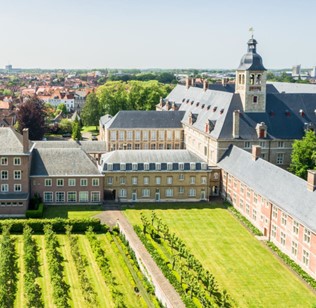
Phased heating plan for Bruges Major Seminary
The project responds to Flemish objectives for public buildings and the requirements of the EPC NR, with the ambition of making the site completely fossil-free in the long term.
Location:
Pottery 72 Bruges
Client:
Province of West Flanders
Budget study:
€22,500.00 excluding VAT
Period of study:
March 1, 2024 - December 31, 2025
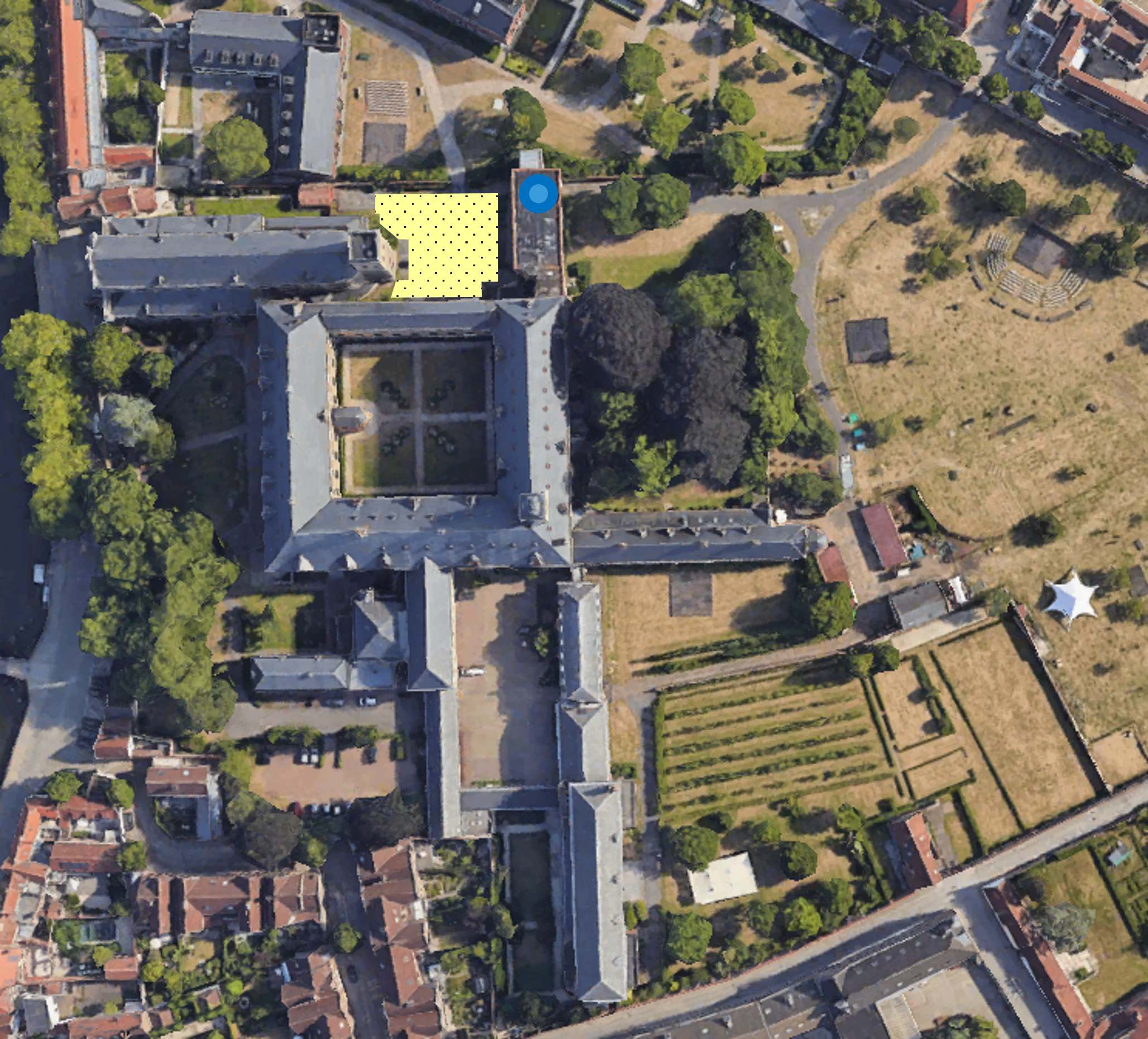
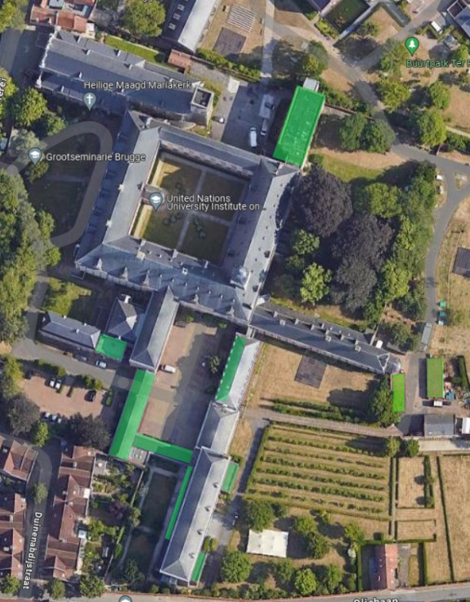
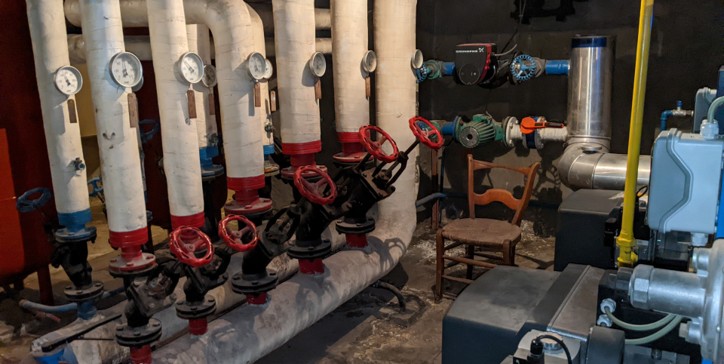
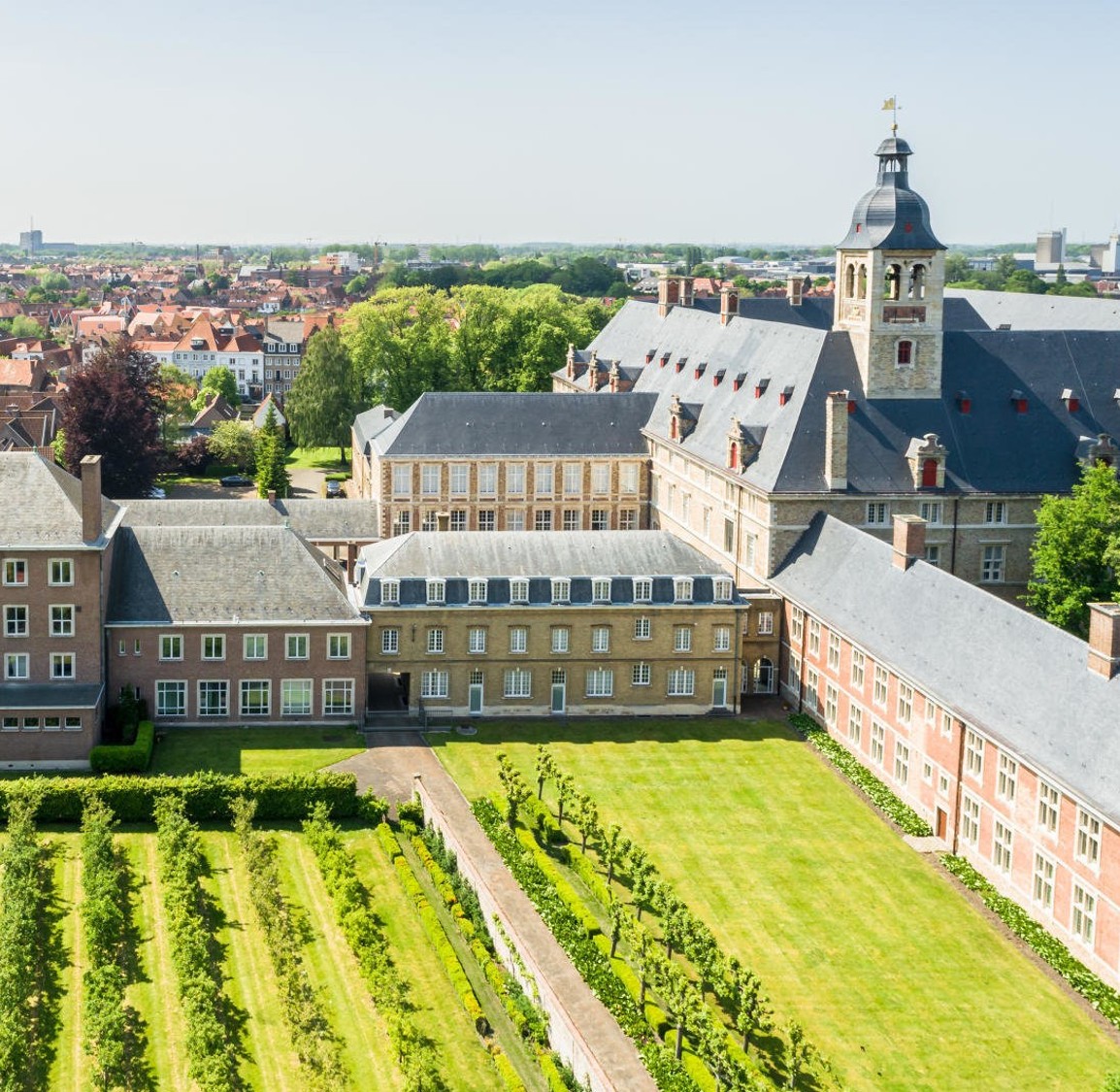
Phased heating plan for Bruges Major Seminary
The project responds to Flemish objectives for public buildings and the requirements of the EPC NR, with the ambition of making the site completely fossil-free in the long term.
The study began with a detailed analysis of the existing installations, energy consumption, and heritage-related restrictions. This was followed by a broad scenario study, in which six potential sustainability options were compared in terms of technical, financial, energy, and spatial aspects. A multi-criteria analysis resulted in two preferred scenarios:
1. 100 percent geothermal energy via BEO fields
2. Hybrid geothermal energy with air-water heat pumps
For both scenarios, a phased step-by-step plan was developed up to 2045, including conceptual designs, capacity and yield calculations, investment and operating costs, spatial integration, and CO2 reduction potential. Particular attention was paid to integration into the protected historical context, acoustic and visual impact, archaeological constraints, stability measures, and the necessary reinforcement of part of the electricity supply.
The result is a concrete investment and implementation plan that provides direction for the site's energy transition, with:
Phase 1 in 2027
*Construction of basic infrastructure, BTES dry coolers
*Renewal of collectors
*Replacement of gas boilers with condensing boilers with lower capacity
*Preparation of the electrical connection
Phase 2 in 2045
*Phasing out natural gas
*Expansion of BEO fields or installation of air-water heat pumps
*Integration of booster heat pumps
*Supply of domestic hot water via the central heating network
Expected CO2 reduction: Up to 57% compared to 2024
Preconditions
*Heritage permits
*Integration of the works with other projects such as sewerage and high-voltage power lines
*Focus on maintenance accessibility and operational reliability
.png)
.png)

.png)
.png)


Also bitten by
smart technology?
Come push boundaries with us and help make a difference in our industry-leading projects.